Animal Farm: Our baby project
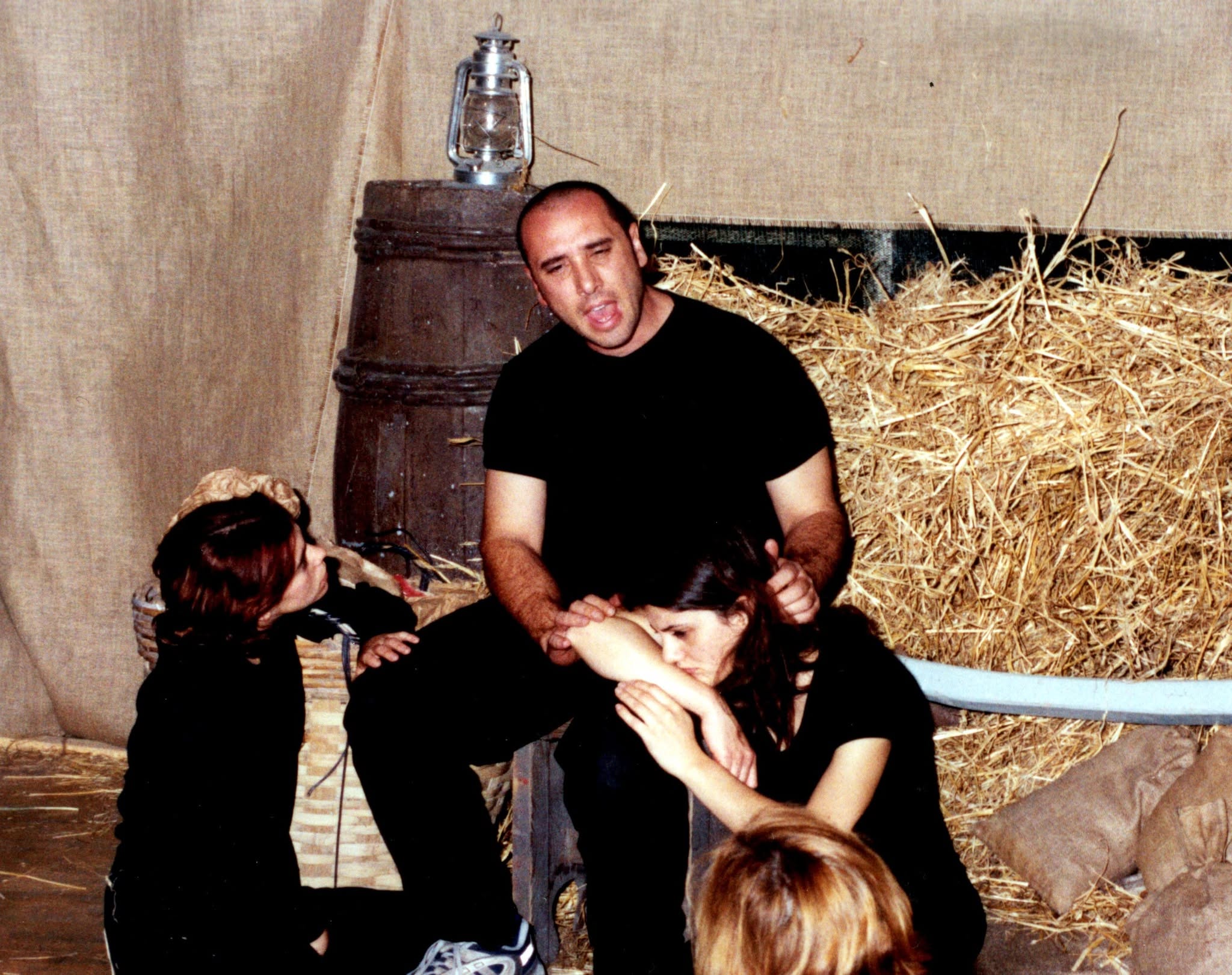
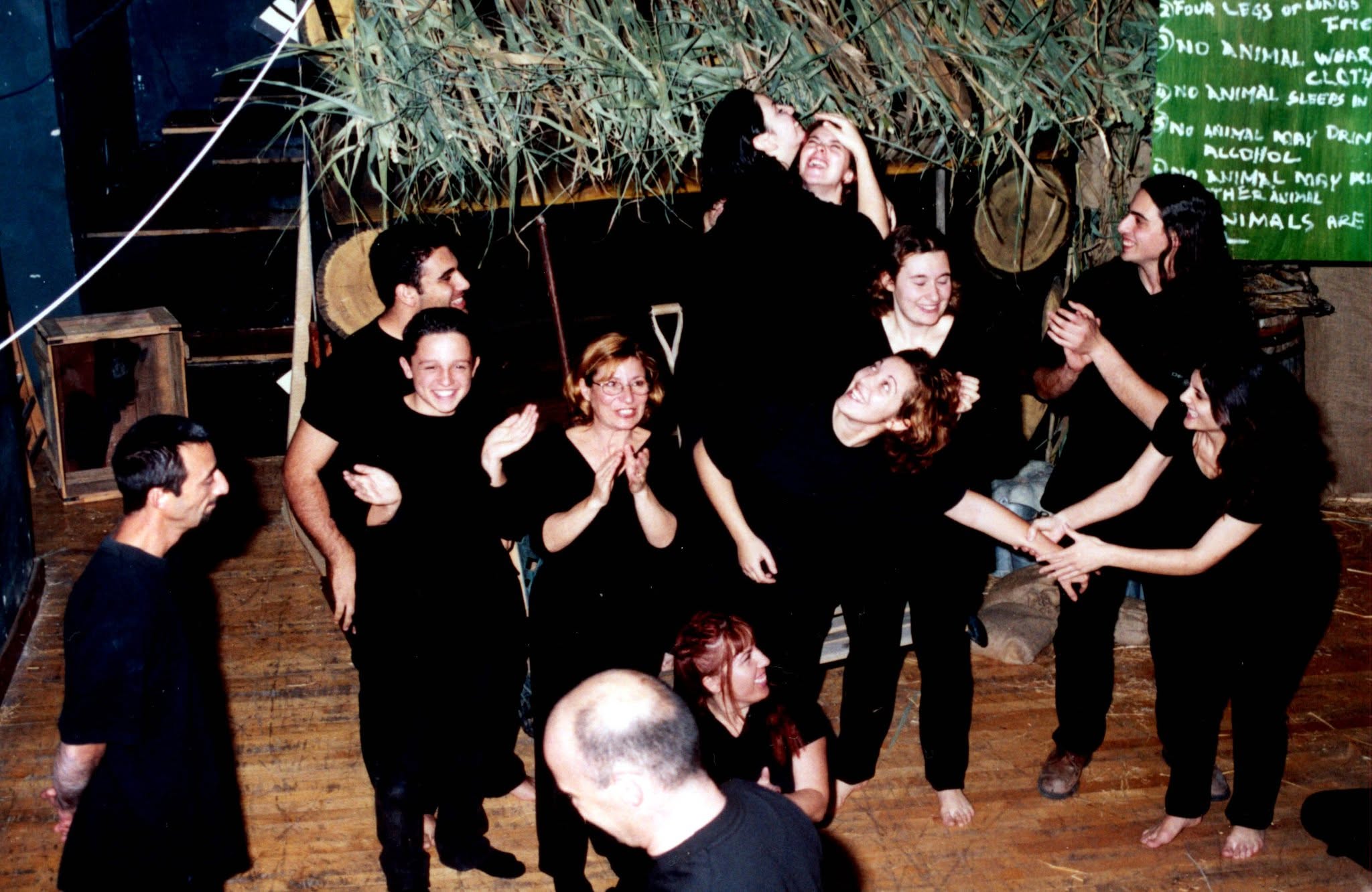
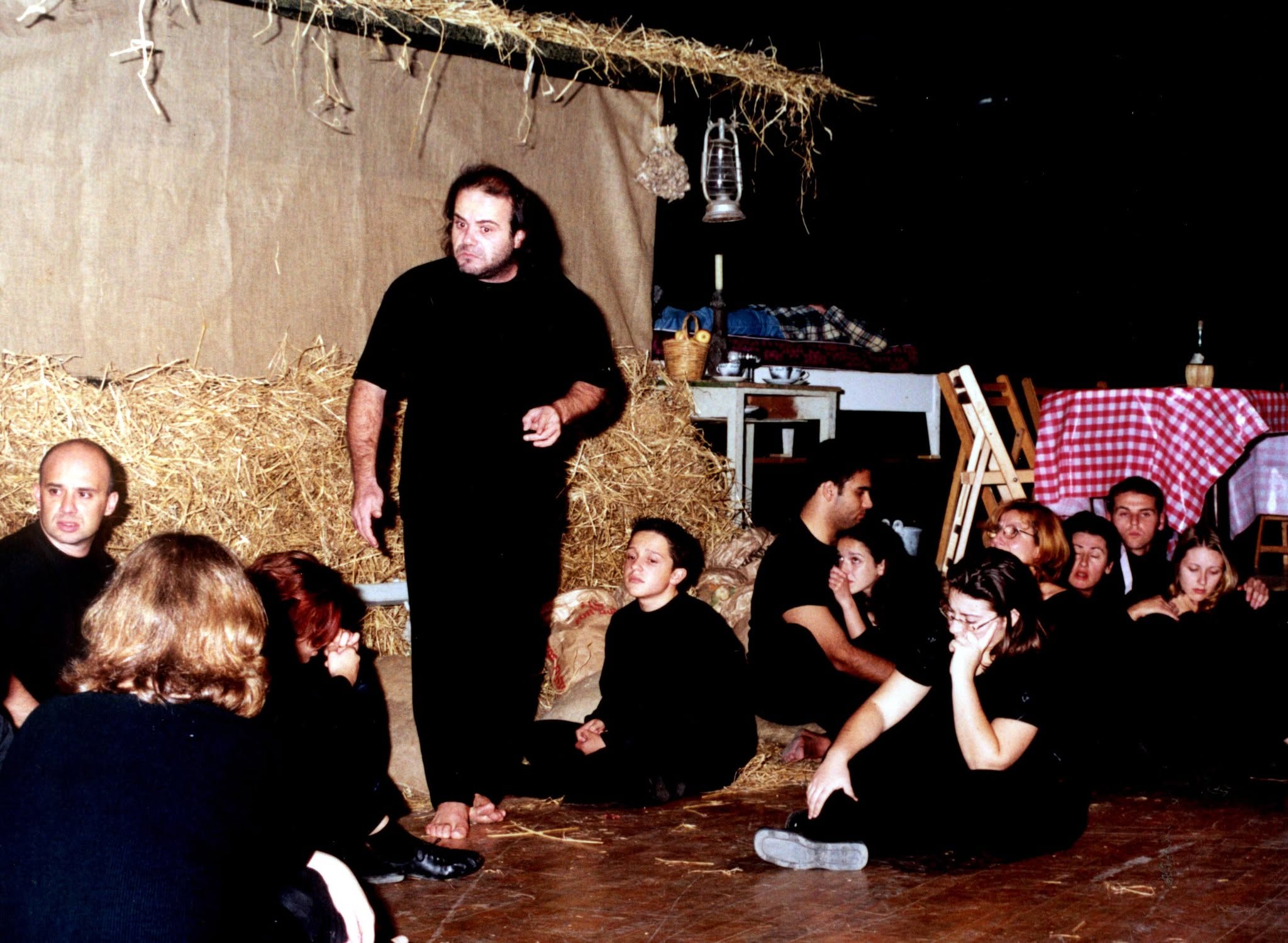
Animal Farm, with a script written by Adrian Scerri, directed by Bryan Muscat and produced by Louise and Bryan Muscat, was produced by Lemonhead Productions and staged at the MITP Theatre in Valletta in December 2000. It presents George Orwell’s political fable as a sharp, physical and theatrical study of power. The play follows a community of animals who overthrow their human master in the hope of building a fairer society. What begins as a dream of equality slowly becomes a new system of fear, control and privilege, until the revolutionary promise is almost completely erased.
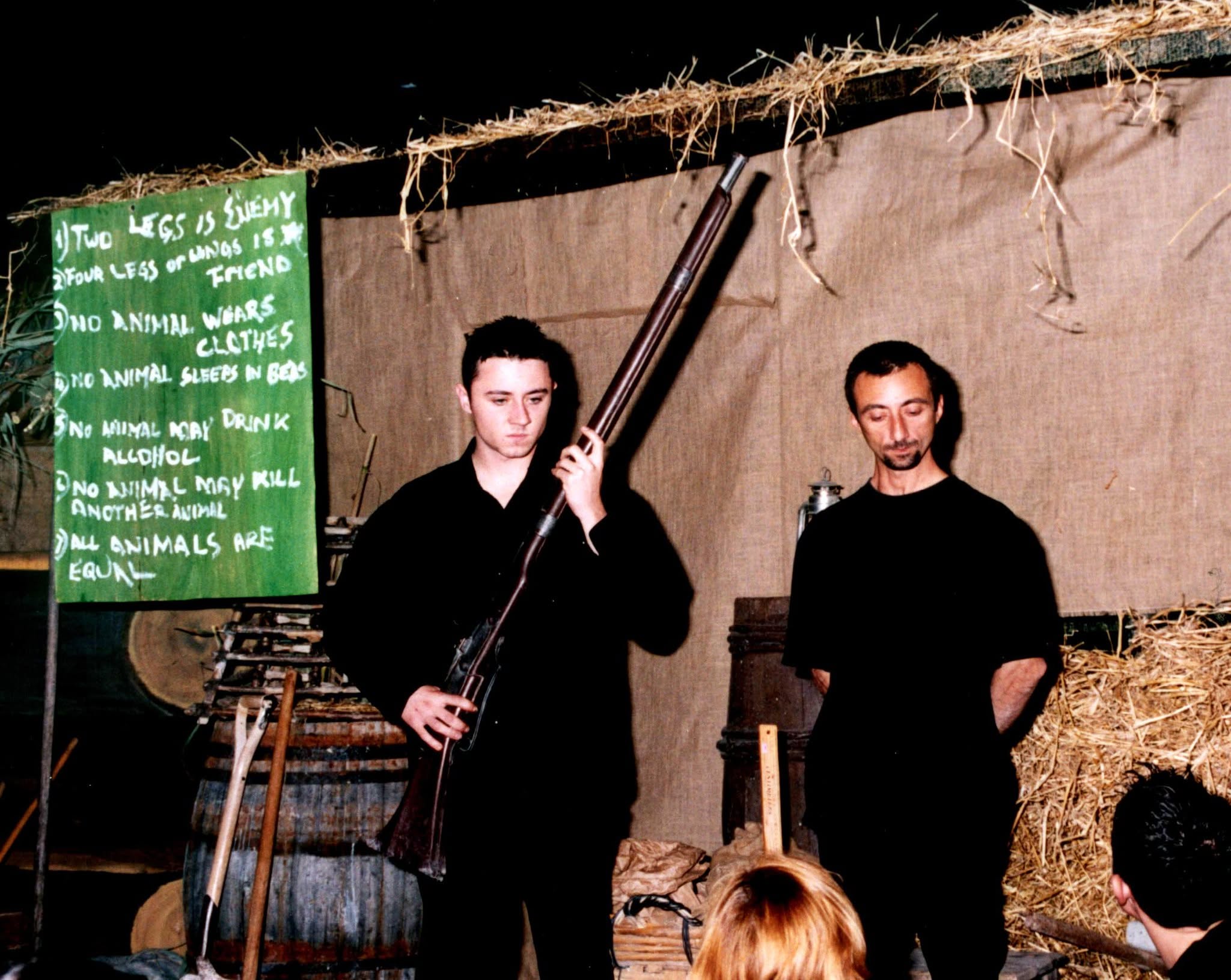
The drama begins with Old Major’s vision of liberation. His speech gives the animals a language of hope: work will belong to those who perform it, the farm will be shared, and all creatures will live as comrades. After the rebellion, however, the ideals of Animalism are gradually narrowed, distorted and weaponised. Napoleon’s rise, Squealer’s persuasive manipulation, Snowball’s exile, the rewriting of the commandments and Boxer’s exploitation all show how a revolution can be emptied of its meaning while still keeping its slogans.
As an interpretation, the play works as an allegory of political betrayal and authoritarian power. Orwell’s original story is widely read as a critique of totalitarianism, propaganda and the corruption of revolutionary ideals, with the farm becoming a small version of a society in which language is controlled, memory is challenged and obedience replaces thought. On stage, these ideas become immediate: the audience witnesses not only what the animals are told, but how quickly fear, hunger and repetition can reshape what they believe.
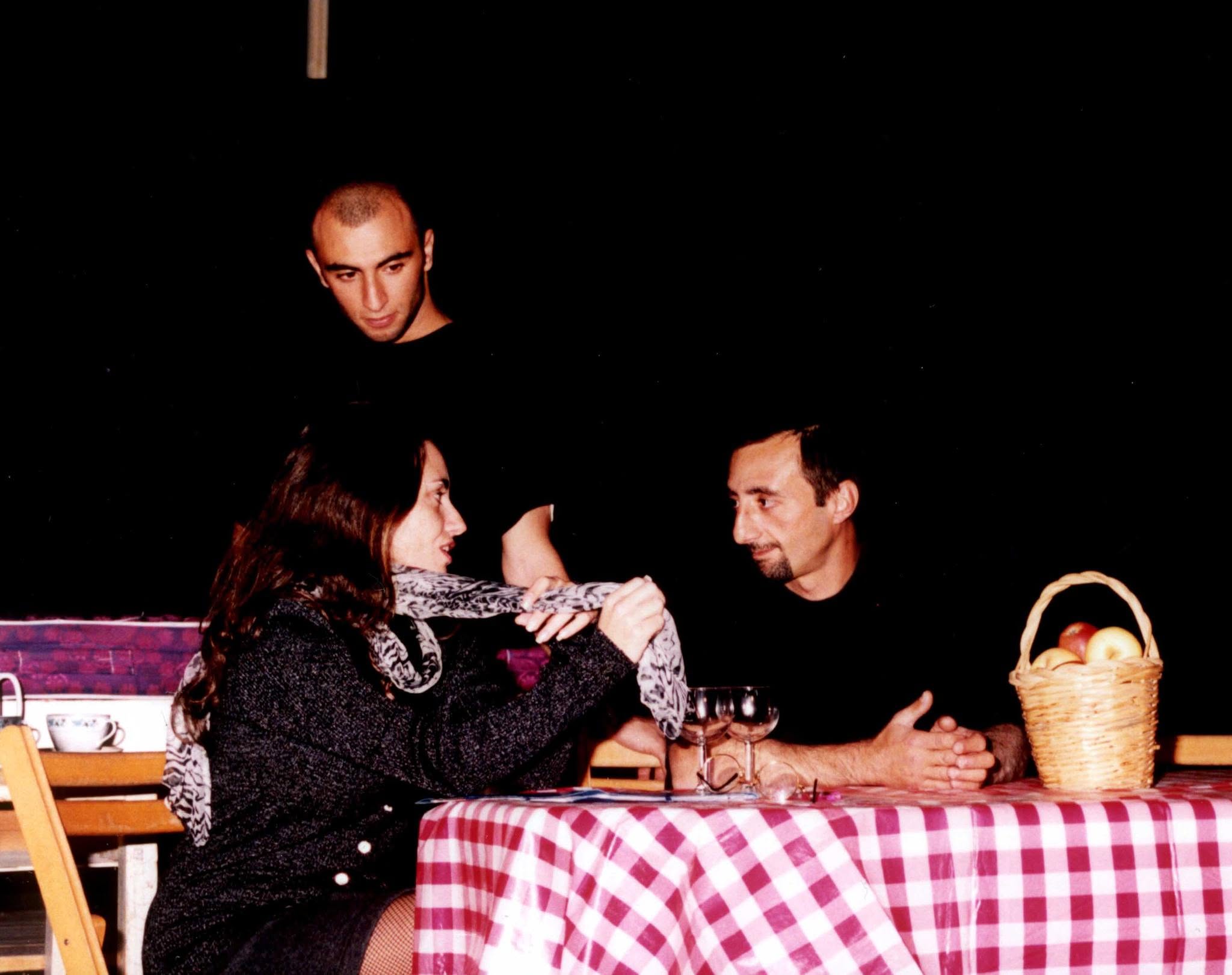
The minimalist approach suits the material because the farm does not need to be recreated literally. A bare stage, simple props, direct movement and carefully chosen sound can suggest barns, fields, assemblies, trials and executions without decorative realism. This reduction places attention on the performers, on the spoken word and on the mechanisms of power. The audience is invited to complete the world imaginatively, making the political structure of the play more visible than any elaborate scenery could.
At the same time, the production’s naturalistic style keeps the allegory close to human experience. The animals are not treated merely as comic disguises or symbolic figures; they behave with recognisable fears, loyalties, doubts and habits. Boxer’s trust, Clover’s unease, Benjamin’s bitter clarity and Squealer’s smooth evasions are all played as human patterns of behaviour. This naturalism makes the political message more disturbing, because the cruelty does not appear exaggerated or remote. It appears ordinary, practical and believable.
Staged at the MITP Theatre in Valletta in December 2000, the production benefited from the intimacy of a compact theatre space. The MITP, later known as the Valletta Campus Theatre, was a versatile performance venue associated with the University of Malta and situated in Valletta’s historic theatre environment. In such a space, a minimalist production could make the audience feel close to the animals’ assemblies, accusations and silences. The closeness between actor and spectator would have strengthened the sense that the farm’s politics were not distant history, but something unfolding in front of the audience.
In this reading, Animal Farm is not only a story about animals who become like men. It is a drama about how ideals are simplified into slogans, how language is bent into obedience, and how the oppressed can be taught to accept a new form of oppression. Through minimalism and naturality, the December 2000 production at the MITP Theatre could strip the play to its essential conflict: the fragile distance between liberation and domination.