


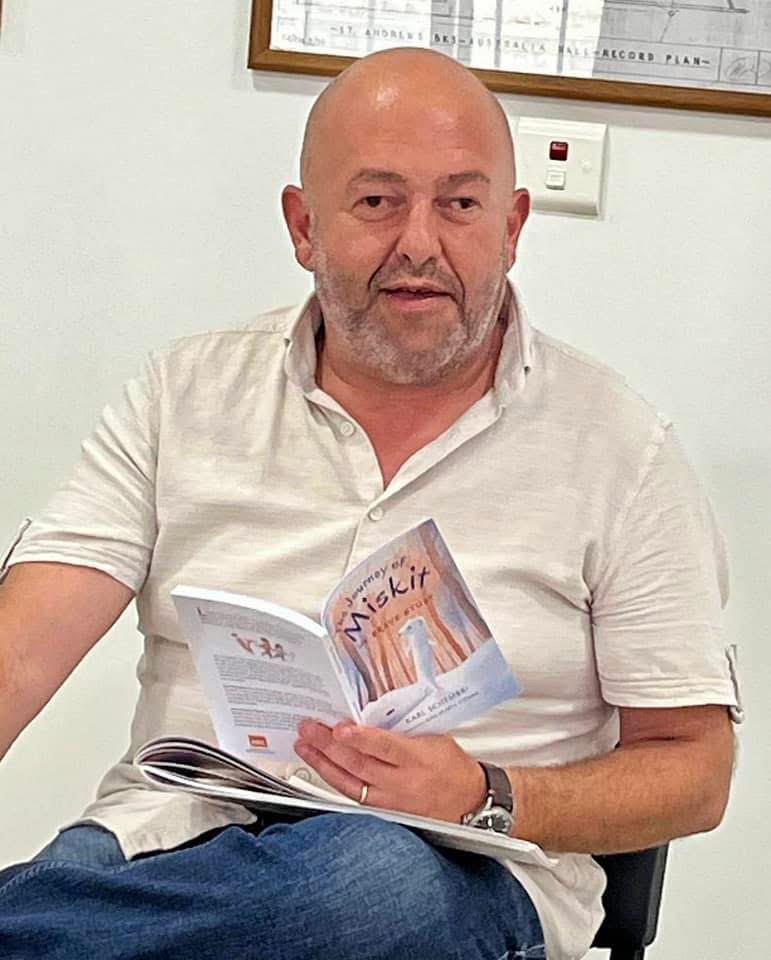
When Bryan Muscat first read Karl Schembri’s Eħlisni mid-Deni, he did not approach it simply as another novel. Karl is a personal friend, and Bryan already knew parts of the real story that lay beneath the fiction. Because of that personal connection, the book affected him in a particularly profound way.
Bryan was struck by the powerful way in which Karl transformed lived experience into fiction. Through fictional characters and circumstances, he managed to retain the very real spirit of the story — the trauma, the anger, the lasting scars left by abuse, and above all the relentless search for justice and acknowledgement.
What affected Bryan most was the novel’s uncompromising portrayal of how abuse does not simply end when the act itself is over. The perpetrator can leave behind damage that continues for years, affecting relationships, families and even future generations. Bryan felt strongly that this was one of the most devastating aspects of the story: the way one person’s actions could destroy far more than a single moment in a victim’s life.
As a theatre-maker, Bryan began to visualise the story almost immediately. He could see Mario confronting the man he holds responsible. He could see memories breaking into the present, childhood images resurfacing, the weight of family, religion, silence, anger and the desperate need to finally be heard.
The more he read, the stronger the urge became to take the story off the page and give it a physical, theatrical presence.
Bryan felt that the stage could offer something particularly powerful: it could place the perpetrator and the consequences of his actions in the same space, forcing both the characters and the audience to confront what had happened and what had been left behind.
For Bryan, adapting Eħlisni mid-Deni was therefore not simply about transferring a powerful novel to the stage. It was about giving visual and emotional form to a story rooted in very real pain — a story about trauma, silence, institutional failure, and the human need for truth, accountability and justice.